How often should you clean your boat's hull in Tampa Bay?
Most boats in Tampa Bay need the hull cleaned once a month. Boats that sit in a slip year round, or that get run hard most weekends, do better every two weeks. The interval is shorter here than almost anywhere else in the country, and it comes down to one number.
The short answer
Pick the row that sounds like your boat.
| How your boat lives | Cleaning interval |
|---|---|
| In a slip, run most weekends | Every two weeks |
| In a slip, run once or twice a month | Monthly |
| On a lift, dropped in for trips | Monthly, or after any long stretch left in the water |
| Fresh bottom paint, first season | Monthly, then adjust once you see how it holds |
| Already covered in hard growth | Clean it now, then monthly |
Why Tampa Bay is different
Barnacles slow down when the water gets cold. Tampa Bay never really gives them that chance. Here is the average water temperature, month by month:
| Month | Avg water temp | Month | Avg water temp |
|---|---|---|---|
| January | 63.9°F | July | 85.3°F |
| February | 64.4°F | August | 86.7°F |
| March | 66.7°F | September | 84.6°F |
| April | 73.0°F | October | 81.1°F |
| May | 78.1°F | November | 74.8°F |
| June | 82.4°F | December | 68.5°F |
The coldest month averages just under 64°F. The annual average is 76.6°F. A boat owner in Maine gets a real off season where almost nothing grows. You do not. Growth slows down here in January and February, and then it picks right back up.
That is the whole reason the answer for Tampa Bay is monthly and the answer you read on some national boating forum is quarterly. They are not talking about your water.
What actually moves your interval
- Where the boat sits. A slip in a canal with slow-moving water fouls faster than an open marina with tidal flush. Two boats on the same schedule in different slips do not foul at the same rate.
- How often you run it. Running the boat knocks off some soft growth, and it helps. It does not touch barnacles once they have set, and it does nothing for the running gear.
- How old the bottom paint is. Paint in its third season is not protecting like paint in its first. As it gets near the end, the interval tightens whether you want it to or not.
- The season. June through September is the fast window. If you are going to be strict about the schedule for part of the year, be strict then.
- What is already on there. Barnacles leave behind a base that makes the next round settle faster. Getting behind compounds.
What it costs you to stretch it
The research on this comes out of the shipping world, where the numbers are big enough to measure precisely. Michael Schultz at the US Naval Academy found in 2007 that a heavily fouled hull can face up to 80% more resistance than a clean one, and follow-up work in 2011 put the fuel penalty on a fouled Navy destroyer at 20.4%.
Your center console is not a destroyer, and it would be dishonest to hand you a percentage off a warship and tell you it is your fuel bill. What carries over is the shape of the problem. Drag climbs fast once hard growth sets, and it climbs faster than most owners expect for how little growth it takes.
What you actually notice on the water, in the order people usually notice it:
- Same throttle, less speed.
- More RPM to hold the speed you used to hold.
- Burning noticeably more fuel on the same run.
- Vibration, once growth gets onto the prop and shaft.
- A bottom job sooner than you planned, because the growth had to be taken off the hard way.
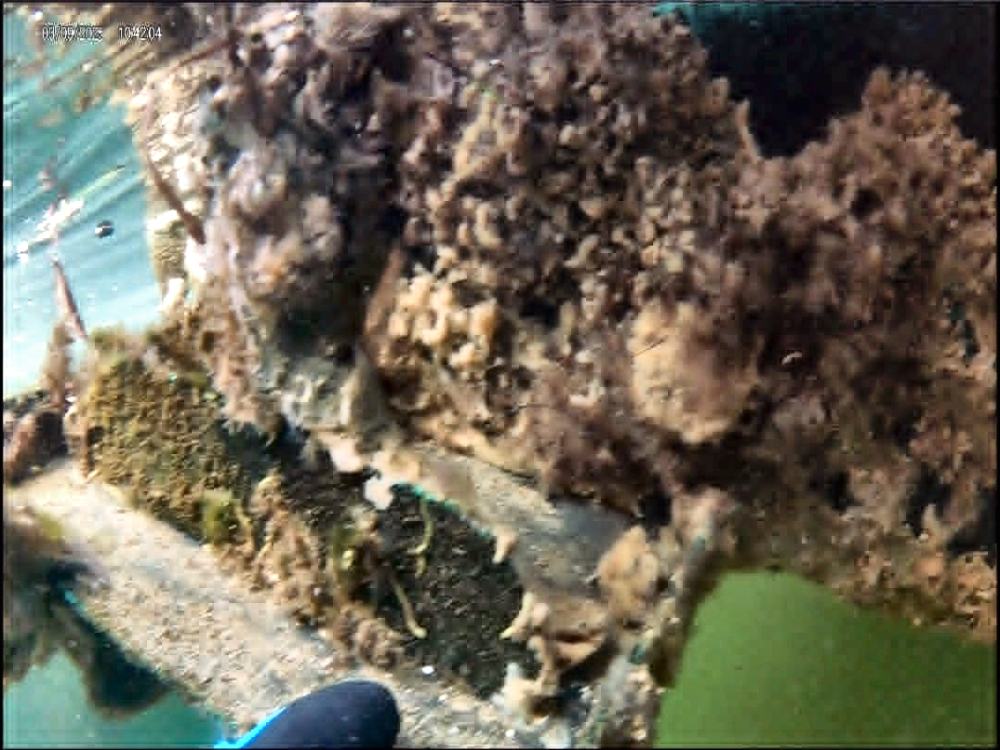
Signs you already waited too long
- You can feel roughness along the waterline with your hand.
- There is a visible fringe of growth at the boot stripe.
- The boat feels sluggish coming onto plane.
- You are adding throttle to hold a cruise speed you used to hold easily.
- It has been more than three months and the boat has been in the water the whole time.
None of those mean anything is ruined. They mean the next clean is going to take longer, and that stretching it again from here gets expensive.
Common questions
Does running the boat keep the hull clean?
It helps with slime and it does nothing for barnacles. Once a barnacle has cemented itself to your hull, no amount of running is taking it off. Boats that get run often still need the same cleaning schedule, they just tend to look better between visits.
Do I have to haul out?
No. Everything gets cleaned in the water, at your slip or at your dock at home. The boat stays where it is and you do not lose a day to a lift.
Is every two weeks overkill?
Not for a boat that lives in the water and gets used. Two weeks keeps every visit short, because there is never much to take off. Monthly on a boat that should be on two weeks turns into a long, aggressive clean every time, and that is harder on the paint than the schedule you were trying to avoid.
If you are not sure which row in that first table is yours, tell us where the boat sits and how often you run it and we will tell you straight. Get a free estimate or call (727) 922-4308.
Get on a schedule that fits your boat
Free estimate, anywhere in Tampa Bay. We come to your slip or your dock at home.